
Lucky
Updated: Oct 2

It was -15 degrees, isolated, deep night. My friend had offered to fetch water for me from the station while I stayed on the phone with her, the two of us talking through the cold and the dark. Then she screamed.
I was already up out of my chair, halfway to the truck, before she got the rest of the words out — a tiny kitten had dropped out of a nearby tree straight onto her shoulder, and started kneading like he'd been waiting for exactly that. We couldn't leave him there. Half an hour later, he was home, warm, and I made him warm milk with a little sugar — his first night, marked properly. He drank it wholeheartedly.
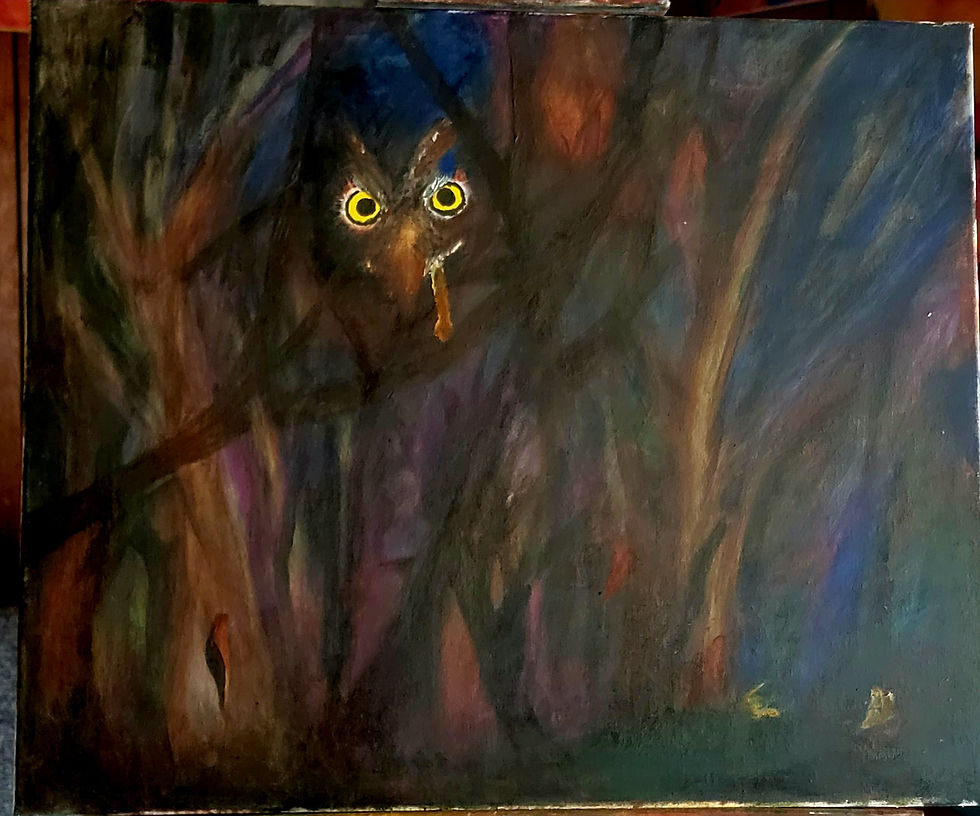
He grew into this — a handsome, privileged, sharp-eyed hunter with a personality as loud as his coloring. This painting holds him the way he actually looks at you: alert, intelligent, aware of exactly how good he has it. His name has never needed explaining.
One original. Offers considered.
The Intelligence Behind Lucky
The easy version of this painting would have been sentimental — a small, grateful kitten, soft and appealing, leaning on the story of rescue to carry the whole piece. That's not what's on the canvas.
What's there instead is a hunter. Sharp, intelligent eyes rendered with real focus and depth, fur painted as a blazing, almost theatrical burst of color rather than something modest or humble, an expression that reads as self-possessed rather than needy. The understanding at work here is in refusing to paint Lucky as a rescue story. He was one, once, for about half an hour on a brutally cold night. He has not been one since.
The intelligence is in recognizing which version of him was actually true by the time the brush touched canvas — not the kitten who needed saving, but the animal he grew into: privileged, colorful, formidable, fully aware of his own presence. Painting him any other way — smaller, sweeter, more grateful-looking — would have frozen him permanently in the moment he was rescued, rather than showing who that rescue actually produced. The real insight here wasn't technical. It was knowing that honoring an animal sometimes means refusing to paint him as the version of himself that needs your sympathy, and instead painting the version he worked his own way into becoming.


Comments